
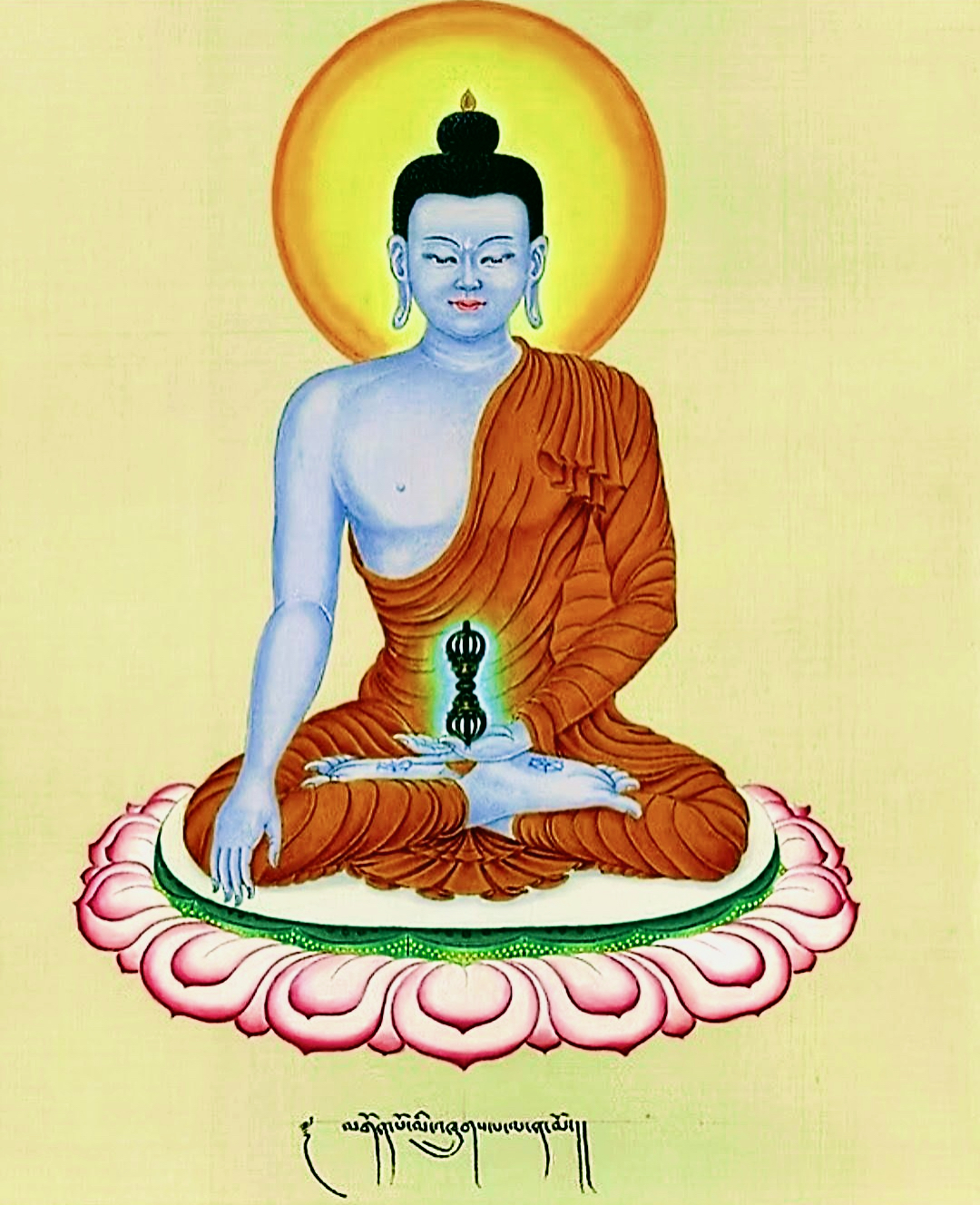
Since writing Thai Tattoo Magick I have received many comments via social media. Some relate to the book itself or asking further questions about my experiences. Others relate however to Buddhist doctrine which I’m more than happy to discuss in my limited capacity and where and when I have the actual time or inclination to do so.
“I don’t know much about the Buddha, but I’m pretty sure I know 1 thing: That he said, ‘walk the middle path’, not too austere and not too loose. And if you just let people walk over you, that’s not the middle path.” ¹
The above quote was sent to me direct message yesterday on Instagram from a student. I felt in this rare instance that I should respect the message with a reply which entails a full blog post in order to fully discuss the message and what it brings up for me. The Instagram statement captures something intuitively right while at the very same time oversimplifying something very profound. The core claim does hold water: the Buddha did articulate the Middle Path (Majjhimā Paṭipadā) in his inaugural sermon, the Dhammacakkappavattana Sutta, framing it as steering clear of two poles “the pursuit of sensual indulgence” (kāma-sukhallikānuyoga) and “self-mortification” (atta-kilamatha) ². But where does this leave us on the thorny question of interpersonal boundaries? Does Buddhism endorse being a doormat, or does the Middle Path actually demand we stand firm when necessary?
The leap from asceticism versus indulgence to interpersonal assertiveness isn’t made explicitly in any of the early scriptures. In the Dhammacakkappavattana Sutta, the Buddha addresses his five former ascetic companions who had abandoned him after he rejected extreme fasting ³. His message was a prescription for awakening, not interpersonal psychology. Yet Buddhist scholarship does resist reducing the tradition to passive resignation. As Peter Harvey notes, Buddhist ethics are “situational rather than absolutist,” calibrated to wisdom (paññā) and compassion (karuṇā), not rigid rule-following ⁴. The Buddha himself publicly rebuked Devadatta, generally seen as an evil and divisive figure in Buddhism who was both his cousin and an eventual schismatic trouble maker, calling him “lick-spittle” when Devadatta attempted to usurp Buddha’s leadership ⁵. This wasn’t extreme in the ascetic sense; it was strategic moral courage rooted in the path’s ethical dimension, not a departure from it. The Noble Eightfold Path, the Middle Path rendered in terms of practical operation, consists of eight interrelated factors traditionally grouped into three disciplines. Under wisdom (paññā): Right View (sammā-diṭṭhi) and Right Intention (sammā-saṅkappa). Under ethical conduct (sīla): Right Speech (sammā-vācā), Right Action (sammā-kammanta), and Right Livelihood (sammā-ājīva). Under mental discipline (samādhi): Right Effort (sammā-vāyāma), Right Mindfulness (sammā-sati), and Right Concentration (sammā-samādhi)⁶. Of these, Right Speech and Right Action directly entail appropriate responses to harm, including confrontation when ethically warranted.
However, the real tension and problem of the message I received is the crunching down of a millennia-spanning philosophical system into a tweetable soundbite which ultimately invites a big logical drift. It encourages confidence without any form of actual in-depth study which as you may or may not know can take many years. The Middle Path encompasses meditative discipline, ethical conduct (sīla), and insight into impermanence (anicca). Collapsing it into just the term “stand up for yourself” flattens any form of nuance into an easy and let’s be honest somewhat dumbed down soundbite. Still, the intuition behind the claim, that Buddhism doesn’t mean servility, is defensible through broader frameworks like Right Intention (sammā-saṅkappa), which distinguishes between ill-will and healthy boundary-setting ⁶. The original message gets the spirit half-right while stretching the letter beyond its scriptural architecture. The Middle Path isn’t just a license for passivity and neither is it a manifesto for assertiveness. It’s a map for navigating complexity without tipping into reactivity. Knowing the difference, and acknowledging what you don’t know, is perhaps the most middle way move of all. My book Thai Tattoo Magick is published by Inner Traditions.
Notes
¹ A personal correspondence with a student via Instagram, 29th July 2024.
² Bhikkhu Bodhi, trans., The Connected Discourses of the Buddha, Wisdom Publications, 2000.
³ Ibid., pp. 1844–1845.
⁴ Peter Harvey, An Introduction to Buddhist Ethics, Cambridge University Press, 2000.
⁵ Bhikkhu Ñāṇamoli, trans., The Middle Length Discourses of the Buddha, Wisdom Publications, 1995, MN 86.
⁶ Bhikkhu Bodhi, ed., The Noble Eightfold Path: The Way to the End of Suffering, BPS Pariyatti Editions, 2010.
References
Harvey, P. (2000). An introduction to Buddhist ethics. Cambridge University Press.
Ñāṇamoli, B. (Trans.). (1995). The middle length discourses of the Buddha (B. Bodhi, Ed.). Wisdom Publications.
Bodhi, B. (Ed.). (2010). The noble eightfold path: The way to the end of suffering (3rd ed.). BPS Pariyatti Editions. Bodhi, B. (Trans.). (2000). The connected discourses of the Buddha. Wisdom Publications.

