
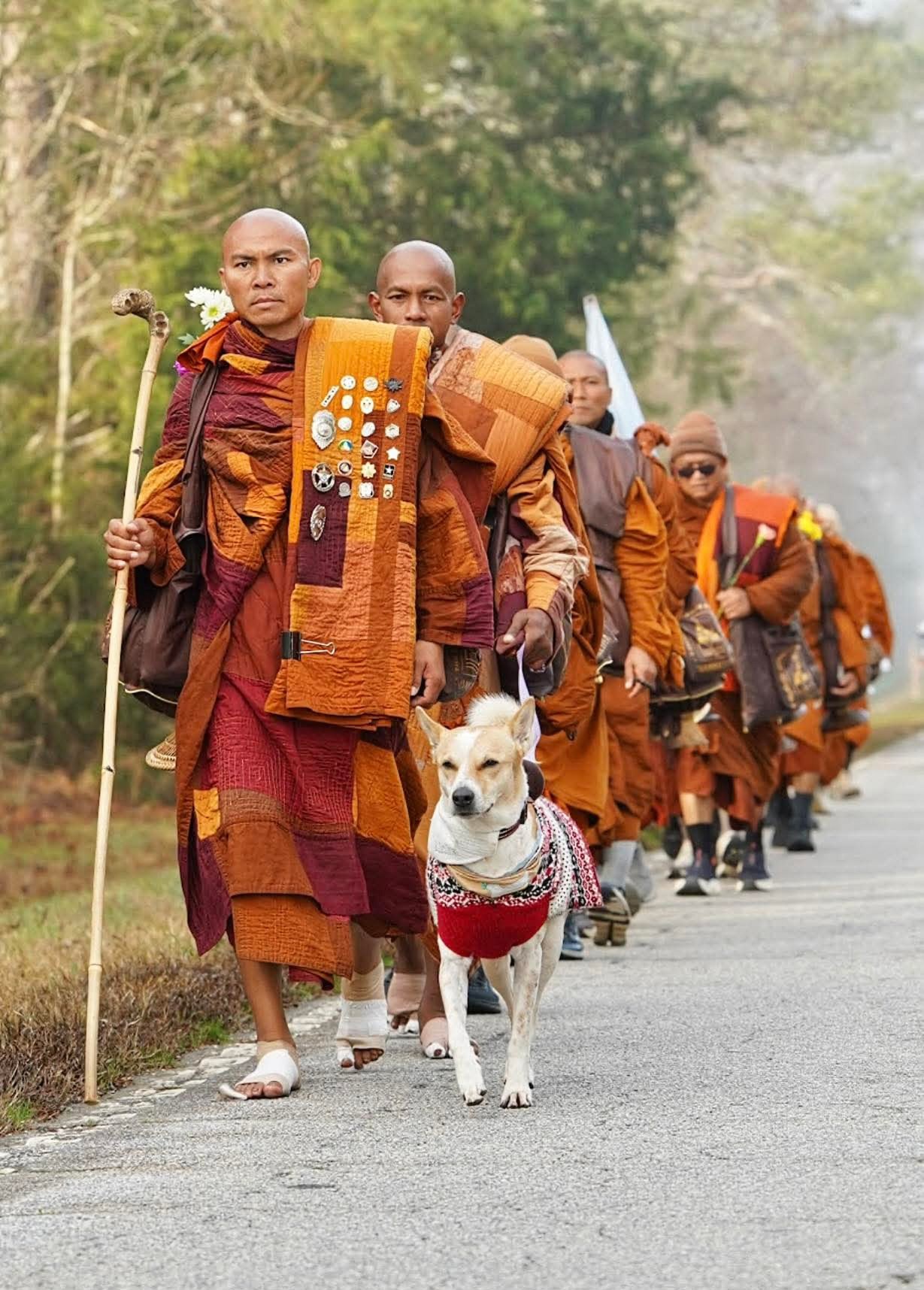
One of the most important Buddhist events in the last few years arguably is the Walk for Peace which is currently being undertaken by a group of Buddhist monks in the USA. They are walking, some barefooted, one monk sustaining life changing injuries, to Washington D.C. Walking barefoot has been a part of Buddhist monastic life for over 2,500 years. The Buddha walked without shoes. Buddhist scriptures instruct monks to live simply. Walking barefoot is a way to cultivate humility and mindfulness. In 2024 Thich Minh Tue, an obscure Vietnamese ascetic monk, walked barefoot for years on scorching asphalt until the soles of his feet turned charcoal black. According to the Pali Canon of the Theravāda School of Buddhism, a monk is allowed to have eight possessions: 1. An inner robe. 2. An outer robe. 3. An additional robe to protect from the elements when necessary. 4. A bowl. 5. A water-strainer. 6. A razor to shave his head. 7. Needle and thread and finally 8. Any necessary approved medicine. Walking 2,500 miles may rationally include a few more items to sustain such a journey. Indeed, there is a dedicated team of behind the scenes devotees and lay people working mindfully.
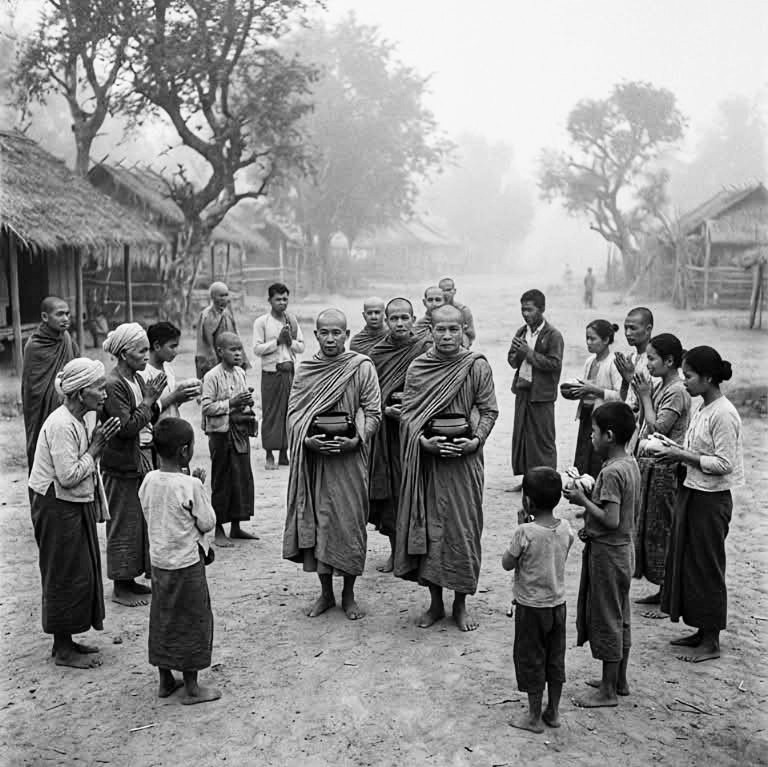
The Buddhist monks on the Walk for Peace are undertaking something which is called Walking Meditation. The Walk for Peace is an extended, odyssey like and journeying process since normal walking meditation typically involves walking back and forth on a straight path of about 30 to 40 feet. The practice of Tudong is ancient. It has been occurring for many hundreds if not thousands of years. The two beautiful black and white photos which are featured below show the ancient spiritual ritual of seeking alms in the community or as it it is known Dāna, a Sanskrit and Pali word that describes the virtue of generosity, charity or giving of alms. Buddhist monks seek alms as a way to receive food and basic necessities from the lay community, which allows them to focus on spiritual practice. This tradition fosters a mutual relationship where lay people gain merit by supporting the monks, while monks provide spiritual guidance. In countries practising Theravāda Buddhism or “Doctrine of the Elders” like Thailand and Myanmar, alms rounds are common and integral to monastic life. Theravāda Buddhism, the oldest surviving school of Buddhism, which emphasises the teachings found in the Pāli Canon, descends from the Vibhajjavāda, a division within the Sthāvira nikāya, one of the two major orders that arose after the first schism in the Indian Buddhist community.
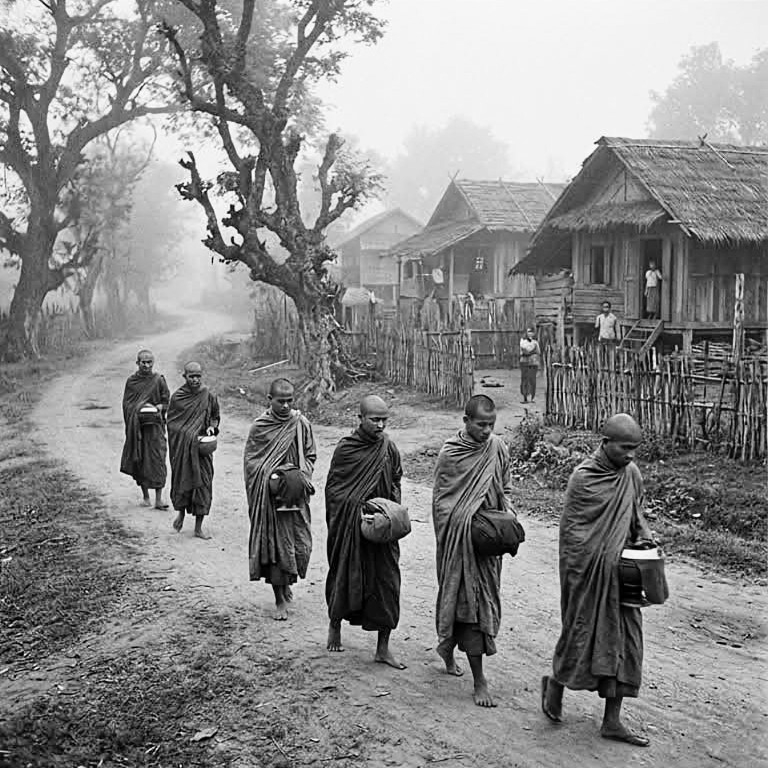
As the Upavana Foundation states: “Today, most monastics live in temples and monasteries. The monastery serves as a place to pool resources, gather for practice, and is easily accessible to the communities that support it. Recognizing that the mind easily acclimates to comfort, the Buddha also allowed monks and nuns to follow special ‘dhutanga’ practices, or austerities. These involve developing contentment with the basic standard of support – alms food gathered in the begging bowl, living in the forest, and having nothing more than the robes and gear one can carry. Rather than taking the monastery as a support, these practitioners take the dhutanga’s themselves as a support, and travel freely in search of whatever conditions are most beneficial for liberation. In Thailand, when a monk leaves the shelter of a monastery to practice the dhutanga’s and live independently, they are said to be ‘going tudong’, a thai form of the word dhutanga. They might practice this way for a few days or for years, and forest monasteries often closely model themselves after the lifestyle of these austere individuals.”
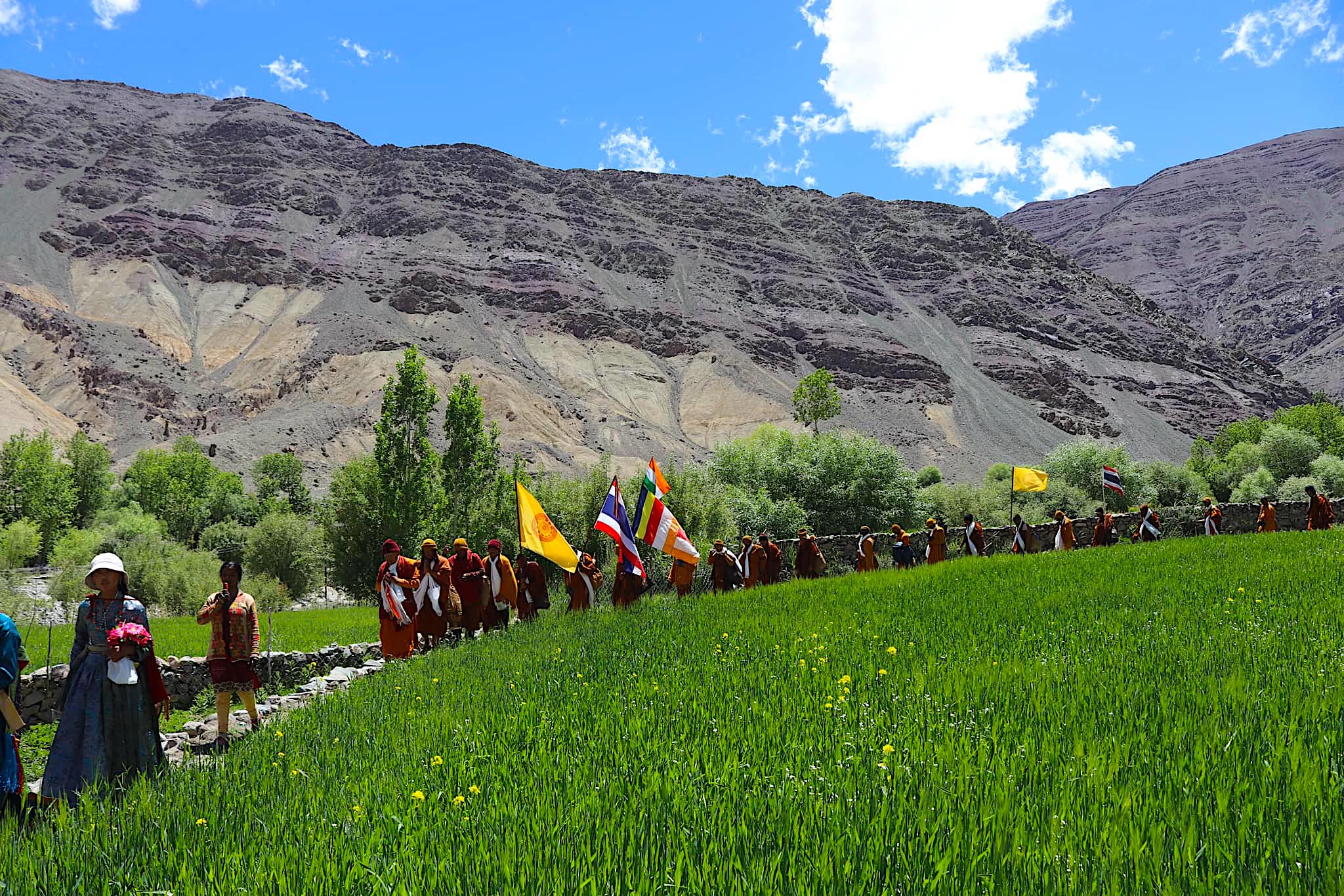
In July 2025 a caravan of female and male Buddhist monastics and lay practitioners from Thailand concluded a 700-kilometer peace pilgrimage for peace, or pad yatra, at the Mahabodhi International Meditation Centre, Ladakh, in India’s mountainous far north. The 150 pilgrims began their peace walk under the leadership of senior Thai monk Venerable Phrateppariyattisuthi Thongsukas in Dharamsala on 10th June 2025, after receiving a blessing from His Holiness the Dalai Lama.
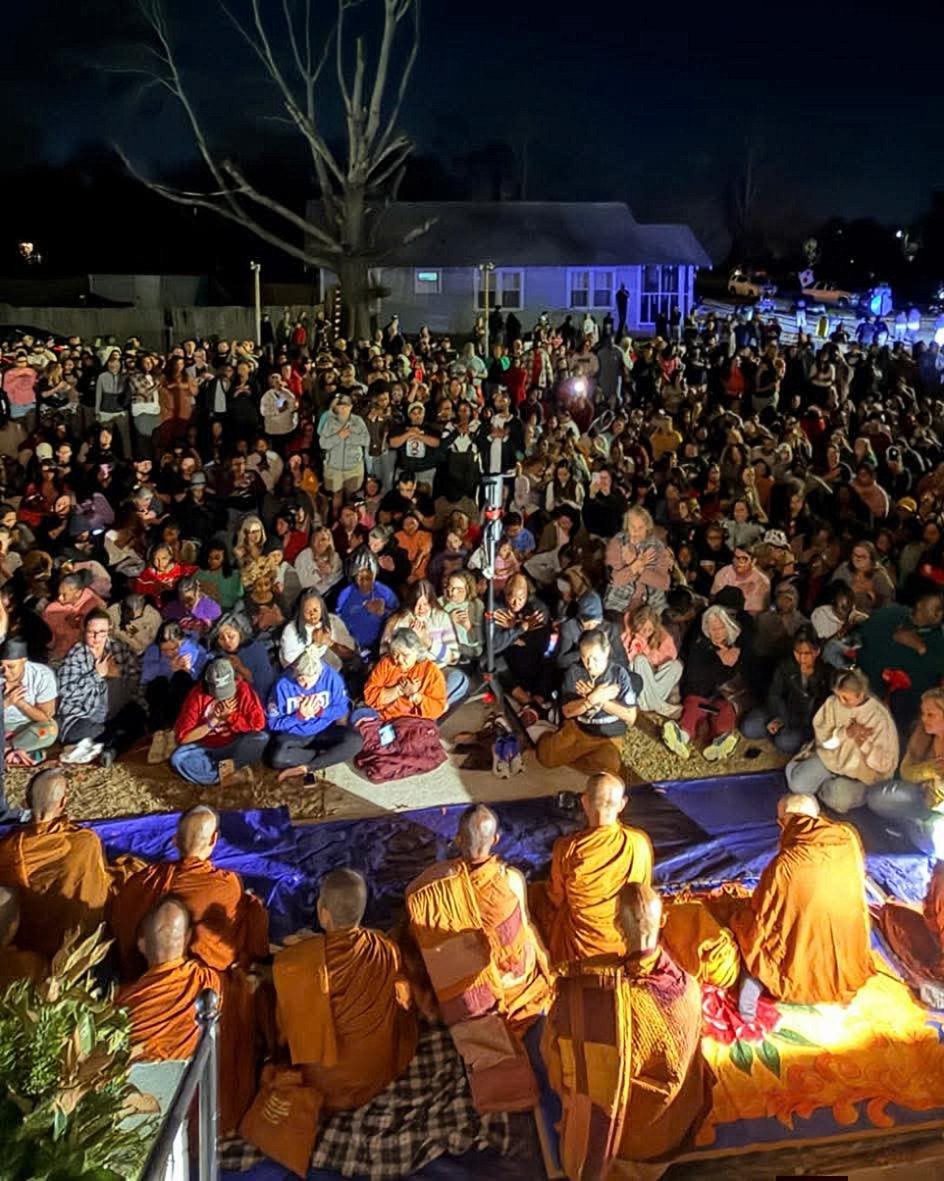
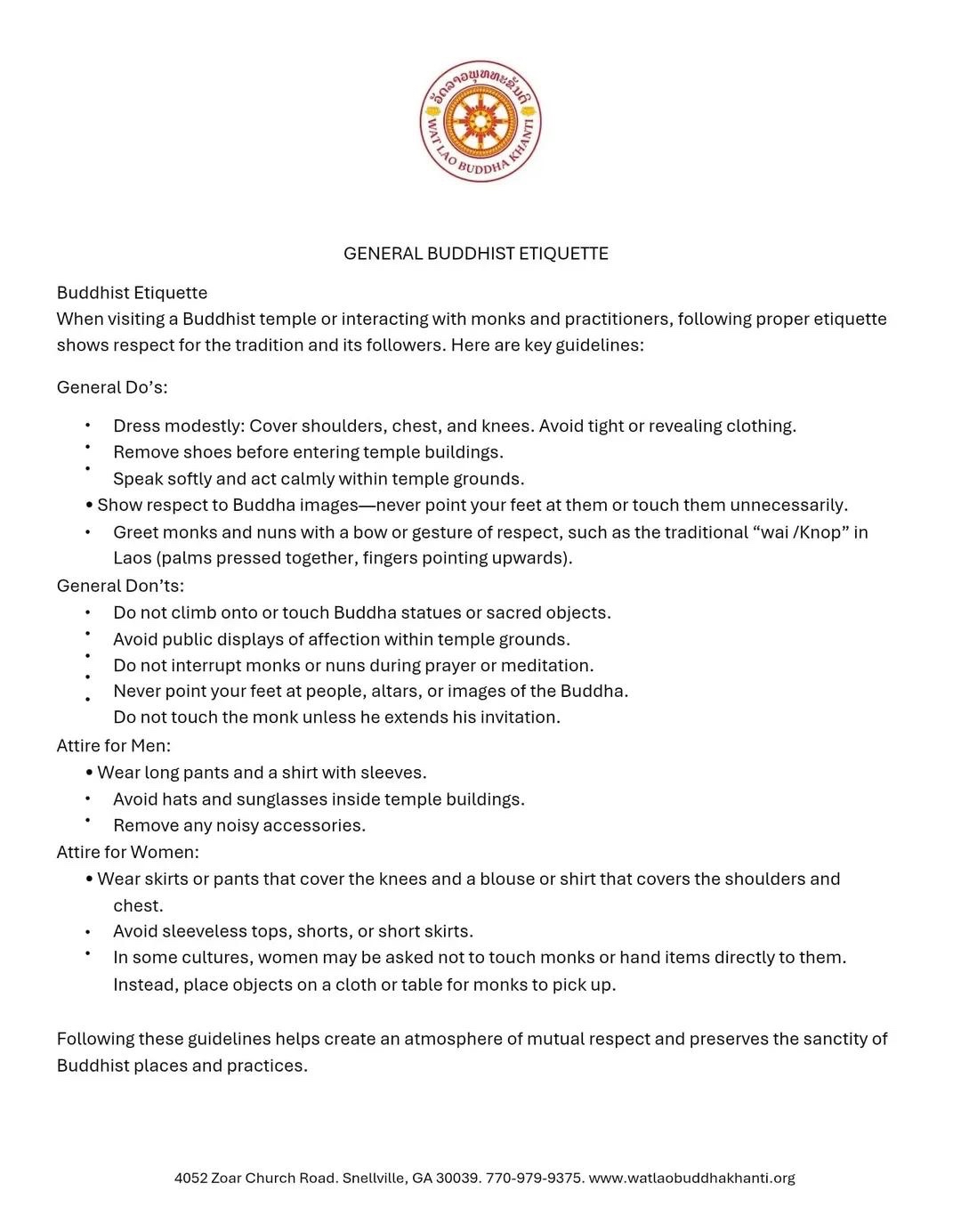
Wat Lao Buddha Khanti of Atlanta posted a clear indication of what Buddhist Etiquette requires when being in the orbit of a Buddhist monk or Buddhist holy site. The outpouring of unbridled joy, emotion and human reaction has swept America off its feet. However, having said this, I have witnessed many countless encounters with men, women and children who have shown complete and total respect to these practitioners of Buddhism. It is best to observe the rules. Please find below the public statement from the temple regarding Buddhist Etiquette. If you wish to support the Walk for Peace you can do so here via the Dhammacetiya organisation. A Live Map of their journey can be accessed here via Google Maps. You can follow the Walk for Peace on various platforms including Facebook which has now officially reached over 2.9 million followers.
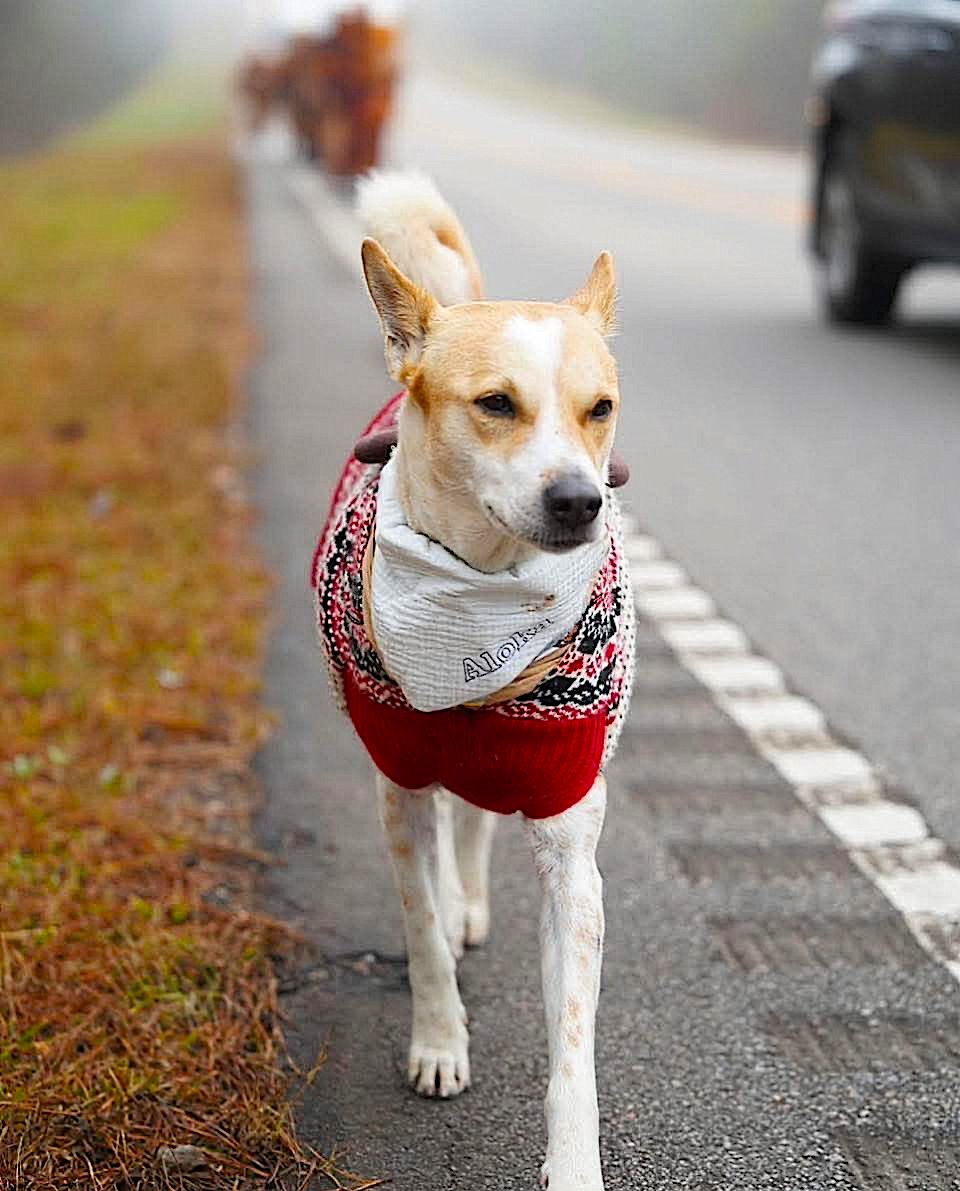
I first posted on my Threads account about these remarkable monks back on 12/12/25 not realising how this event would change my life. Never since my engaging with social media platforms I have ever experienced such a vast, warm, loving and enthusiastic denotation of love, kindness, mindfulness and compassion. I cannot being to describe it. I am not ashamed to say that there have been a number of moments when I have wept while posting. Is this normal? One commenter said; “This is crazy!”. To which I replied; “This is change.” I now humbly say this a spiritual revolution. These gentle Buddhist monks are currently on a huge 120 day Walk For Peace from Fort Worth, Texas to Washington D.C. with their lovely dog Aloka the Peace Dog to “raise awareness of peace, loving kindness and compassion across America and the world”. But should you happen to meet one of these remarkable and awe inspiring monks on the road one day, consider yourself very lucky indeed! Such reminders of the path of enlightened beings are very rare in our world. Thousands of interactions have occurred which have all changed lives. The healing, the connection, the teachings, the silence, the practice, the breathing, the mindfulness. To fully document this phenomenal event would take a considerable amount of time. It is a big moment in this planet’s history despite the act of walking and walking meditation being an ancient ritual. It’s a shining symbol of peace, hope, multi-faith and multiple organisational initiative.
Please join me on my Threads account as I’m devoted to posting daily about this social phenomenon which has gripped the world. I write passionately with positive energy about this subject and hope you’ll join me. My book Thai Tattoo Magick is out now on Inner Traditions. May all beings be well, happy and in peace ॐ
 Sheer Zed ~ Author • Buddhist Shaman • Musician