
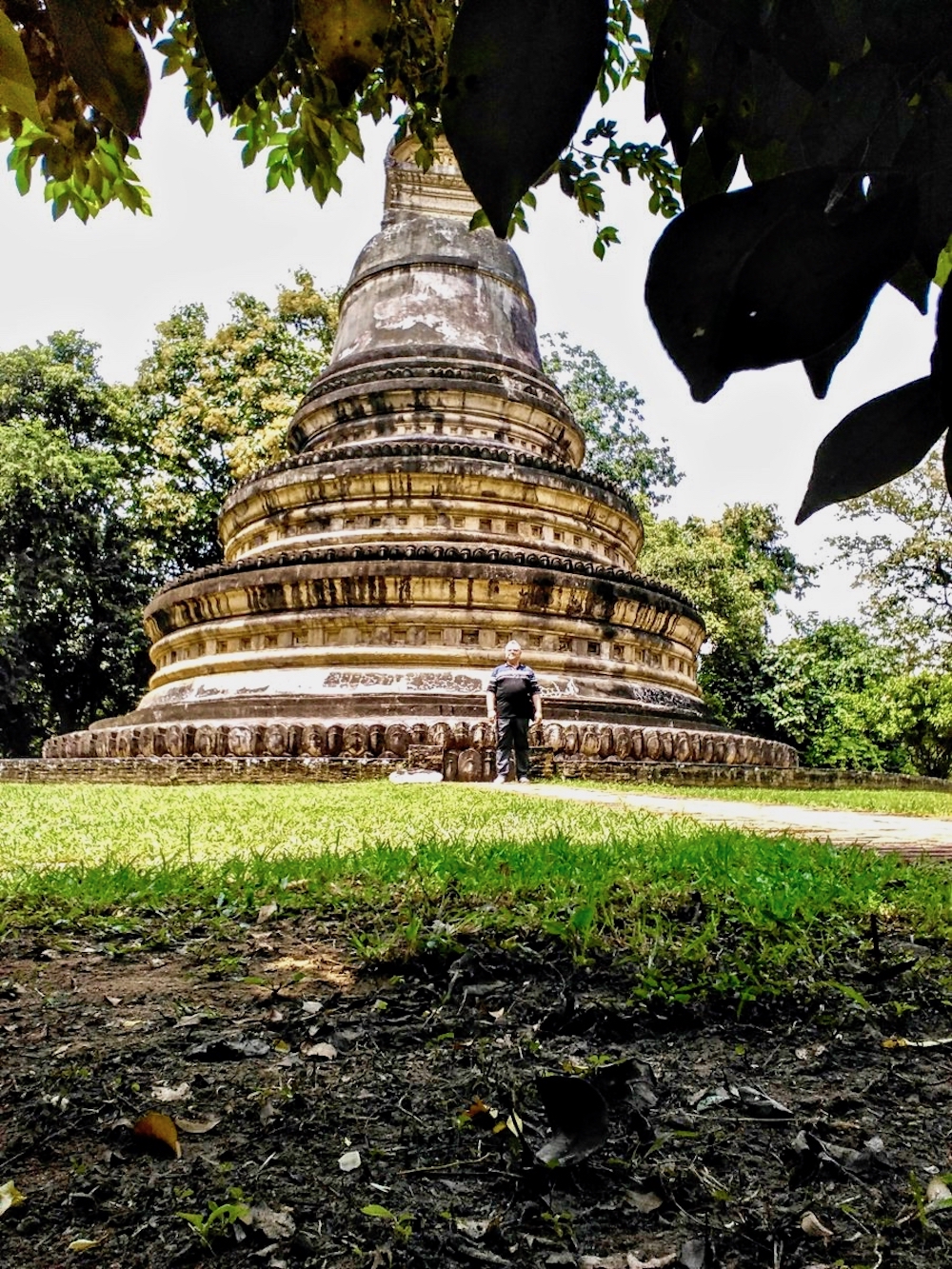
After studying and taking an active interest in Buddhism for roughly forty or so years in 2017 I finally met for the first time my first Ajarn. An Ajarn is a Thai practitioner of Buddhist, Animist and sorcerous methods and magickal techniques within the philosophy of what can be called Thai Buddhism. It is unlike any other form of Buddhism on the face of this planet. Do not try to compare it with any other form. You will fail. It is a very highly complex hybrid of many other forms of belief that have been absorbed over great expanses of time. The main subject of this blog however is about meeting Ajarns. I have recently been approached from various folk with questions surrounding different points. I felt that it was time to write about this subject so that I can relay my view point which you may or may not find helpful. I have been extremely fortunate and blessed to have met Ajarns on four separate occasions since 2017. Each time this has occurred while in the shadow of a great personal tragedy or near the epoch of some global catastrophe. Therefore the true essence of pilgrimage has been fully embraced on each and every single journey. Suffering and a certain amount of pain is required and necessary in order to receive the fullest and deepest meaning and spiritual accomplishment. Suffering is something that a devotee will not be frightened of and will undertake this aspect without any hesitation. A pilgrimage is a very serious undertaking, requiring special planning and resources. It is the culmination of years of practice and lifelong goal. Anyone who dies on a pilgrimage is assured a heavenly rebirth. Pilgrimage is a liminal space between the mundane and the sacred. Tibetans on a pilgrimage to Lhasa, very often do full-body prostrations for the entire length of the journey. In Thailand there are numerous locations that are deemed to be essential places of pilgrimage; Wat Phra Kaew, Wat Pho, Wat Doi Suthep, Phra Pathom Chedi, Sukhothai, Ayutthaya, Wat Phra Phutthabat, Wat Phra Thaen Dong Rang (Buddha Death bed), Chedi Phukhao Thong, and Phra Pathommachedi. My own pilgrimages have been somewhat idiosyncratic but have also followed some recommended places of pilgrimage. Yes, I have circumambulated around an ancient Chedi three times at Wat Umong (see photo). Undertaking meaningful rituals is to be encouraged. This does not mean however that you should not travel without full insurance coverage, not have carefully planned itineraries (these can change at the drop of a hat) or not ensure you are mentally or physically prepared. I have spoken with some folk who have literally had a nervous breakdown due to the spiritual impact of both the ritual and cultural shock. I myself had a moment or two during my first pilgrimage. Sak Yant tattoos are something that I did not expect acquiring in any quantity or reckon upon beforehand, and in truth, had no interest in whatsoever before immersing myself in this profoundly life-changing pathway. Apart from studying the great master Fakir Musafar, any form of body modification did not interest me. I hope that the following do’s and don’ts manage to guide you on your journey and answer any questions you may have before spending money on plane tickets, hotels, insurance and a natty wardrobe, though this aspect is something of an anathema to me. Less is more. Always.
The Do’s
Spend time researching Thai Buddhism. There are many books and videos on this subject. Feigning ignorance while in a foreign country is not recommended. Learn about the country and its history and culture. Being fully prepared beforehand will assist you in creating an initial reference point of understanding. Owning amulets is fine. Studying Thai magick is fine. Meeting the maker of the amulets you have worked with is another entirely different kettle of fish. While it may seem tempting to book up on the fly and plan Thailand as a kind of excursion while visiting somewhere else I cannot state strongly enough what a culture shock it will be to your entire system stepping off the plane and feeling the oven furnace heat of a sub-tropical country. If you have not done this before you will definitely need time to acclimatise to this new setting. I advise giving yourself at the very least a couple or so days before venturing into your journey. Your body is being cooked and the jet lag (depending on where you have come from) will play havoc on your body. Your kidneys will think they are still elsewhere and this in itself can be very highly disconcerting. Having said this I personally ended up in a jungle temple on the third day of my very first pilgrimage speaking to the ghost spirit of an arahant. As they say fish gotta swim. Do spend time in temples. This replenishes your being. In Thailand there are literally thousands upon thousands of totally beautiful and in some cases exquisite Buddhist temples to visit. There are a plethora of charming shrines, spirit houses and temples dedicated to a multitude of subjects at every possible step and turn. Every possible auspicious corner and compass point on the Thai map has a place of devotional focus. It reflects a deeply engaged and devoted culture of spiritual endeavour, belief and worship. These holy and sacred places of worship are sublime places of immense spiritual energy. Your behaviour while there must be exemplary. Act appropriately when you are visiting. Being rambunctious, noisy or disrespectful will simply not cut it. There are countless holy sites in Thailand to visit which require a serious amount of inner calm to be generated from within you. It will pay dividends in the end. Mastery of yourself and any random impulses within you require utmost discipline. Arranging meetings with Ajarns must be done so in advance. Hitting up someone you think may know where the address is where they live at is highly dissuaded. In a period of time an Ajarn can move residence a number of times. This may be due to numerous reasons, so attempting to triangulate the location of an Ajarn remotely is not advised. They are not open to random house calls and do not meet people without any prior arrangement. I’ve always gone through third party fixers, drivers and translators who charge daily rates for their services. Do book a fixer beforehand. There are plenty to choose from. Yes, you may see folk seemingly turn up on an Ajarn’s Facebook feed receiving a blessing or acquiring Sak Yant. This is always done through a trusted third party. Ajarns are very often in high demand and it is worth your while spending the time and effort organising your meetings in a professional manner beforehand. Do make your arrangements months in advance. While in the presence of an Ajarn it is always important to show deference, respect and patience. Ajarns can see many things and will know what lies inside of your heart. This is not some form of hokum. Seers can see. They will x-ray your mind, body and spirit and know things about you that even you don’t know. Ajarn Suea for example has a capacity to read a persons body and then through profoundly skillful means present to you various divinatory results pertaining to your future, people to avoid, things to watch out for or general spiritual guidance. The guidance may be for acquiring very specific Sak Yant you might require in order to balance your energies. This has happened to me and I can honestly testify that this is 100% authentic and correct. Divination of this level is rare. Do listen when you are delivered a result by someone of Ajarn Suea’s calibre and then act upon it. When an Ajarn, like a doctor, gives you a diagnosis it will behove you to follow the advice. Ajarns are there to help, guide and assist you with whatever you require in terms of blessings, rituals, guidance, Sak Yant or amulets that you may need in order to protect or support you. Within this framework your intuition may add further additional requests. Do follow these impulses but always listen to the teacher in the first instance. I’ve had an Ajarn cancel a ritual on me because they did not feel that the timing or astrological positioning was auspicious enough for a successful completion. This is the sign of an extremely professional Ajarn.
The Don’ts
Don’t drink or do drugs. I know many go to Thailand to find a beach or flat and then get loaded. Don’t. I made the mistake during my first visit of drinking three glasses of red wine at an important dinner. The jet lag, grief from my father’s death, exhaustion from the intense heat and my entire being on an emotional hair trigger made for a bad situation for not just myself but for also everyone else around me. Thai people look down on those that are unable to hold their liquor. Since this episode I have renounced all forms of drink and drugs (unless of course they are medically prescribed). I have seen far too many times people on holiday getting drunk, slumping onto the floor and then get attacked by a Thai biker gang ending up in hospital facing a Go Fund Me level of medical billing. By not drinking alcohol you circumvent this likelihood. Trust me. You’ll thank me later. The experience of interfacing this extraordinary culture will make you high anyway. You really don’t need to drink. If anything ice cold bottled water (with many deeply blissful visits to the frozen air con in Seven Eleven’s) and strong coffee at the many coffee shops are the order of the day. You will in effect be drinking to replace the water that is literally leaving your body every second of the day and night. Rehydrating yourself with non-alcoholic liquids will be the best practice and not consuming alcohol. For some reason alcohol in Thailand takes on the characteristics of being hit with a baseball bat. The environs become trippy due to the heat and also because of the heavy amounts of spirit that dwell in Thailand. I kid you not. It is crammed full of land, water, air and sea spirits. If you are sensitive and predisposed to this as I am you will find yourself at times in shock and awe by the amount of supernatural activity that persists and is prevalent throughout Thailand. Meeting an Ajarn once you have secured an appointment will take a considerable amount of inner calm and fortitude. Don’t stare at them or freak-out in their presence. You will be inside a spiritually charged and fully consecrated Samnak, their place of worship and work. You may be fascinated by a myriad of objects and statues and may experience sensory overload. Don’t touch anything. Always ask your guide as to what may be acquired personally and what is a part of their fully operational shrine. Unless an item is inside a glass case alongside other similar looking items and look as though they are displayed as if they were inside a retail store I would recommend you do not touch it. It is difficult to see boundaries inside a Samnak and one should be careful not to impinge upon a specific area that is deemed sacred and holy unless of course you are invited to place an offering. The whole location will be deemed as a sacred place. Don’t act up. Holding your composure during Sak Yant is important. This is part of the ritual and your calm and endurance during the pain of a rod being driven repeatedly into your body directly reflects your inner mastery and stature. Before I visited Thailand I had indeed experienced pain, as of course most of us have, but this form of pain, the pain of Sak Yant, particularly Sak Yant onto body locations that are very sensitive, will test you to the very core of your being. The pain is a part of the pilgrimage. The pain is the pilgrimage. Pilgrimage is practice. Pilgrimage purifies negative Karma. Pilgrimage rejects the safe and familiar. The earliest reference of pilgrimage in Buddhism came from the Buddha himself in his last discourse before passing away and preserved in the Mahāyāna Mahāparinirvāṇa Sūtra. Pilgrimage is a transient liminal experience towards a destination of significance within yourself and outside of yourself. Lelung Shyepé Dorje (1697-1740), a prolific author and important master of both the Gelugpa and Nyingma tradition epitomizes pilgrimage beautifully: “Leaving our homes behind us we are self-abandoning yogis…As meditative experiences spontaneously arise, we travel joyously…without hope, doubt, or attachment as to whether or not we will succeed. We have no concern for our personal comforts…Nor for the binding fetters of monasteries or the knots of worldly existence. Nor do we strive for nirvana. All places are joyous to us. We have no fear about dying on the way…nor will we have regrets when we have to return.” Offerings to Ajarns are usually placed onto some form of large tray alongside with any number of other offerings. These can range widely from donations of money, fruit, flowers, old style tobacco cigarettes, in fact the list is endless. Your guide will know of a good store that specifically sells the offerings required for meeting an Ajarn. Yes, there is an entire industry surrounding the production of offerings. Having a good fixer with deep local knowledge will help you to ascertain which very specific offerings are required for the Ajarn you are meeting. Each Ajarn is different. Don’t expect all Ajarns to be the same. They are most definitely not. They very often have different teachers, skill sets, lineages and also have on their shrines numerous different deities represented with the Buddha always in the top position. Each Ajarn I have met is unique. Each and every one of them have a very specific presence and atmosphere which over time you may possibly begin to understand. Then again you may not. They are enigmatic and inscrutable practitioners who will only bestow to you special blessings when visiting them over time. Money donations are not instant access to all things. You will need to be deemed as worthy over time before more esoterically deep and obscure rituals are bestowed upon you. You will need to be in the moment and completely present when meeting with these extraordinary masters. You cannot ever be distracted or your mind floating elsewhere. They will require your full and utmost attention and do not accept any shallow or phoned in gesture of your presence. It is wise to stay off your smartphone unless you are attempting to take a photo with them or you wish to take photos of items that are being offered. In all cases when it comes to taking photos always ask first. Staying off social media when in the presence of an Ajarn is simply showing courtesy. Many Ajarns are on social media. They might post photos of your visit. Therefore it is important in the first instance to establish any parameters concerning privacy. I have seen some devotees have a smiley face superimposed on their faces in photographs. These masters are practitioners of profound and considerable concentration. While in their presence, if you are lucky enough to have reached this point, you must have enough of what is called Samādhi to be able to have what could be termed a successful meeting. The results of any magick rituals that have taken place are sometimes very slow in transpiring into your life. You may find many months have passed and that some changes have begun to occur. Taking time to carefully organise your visit while looking deep inside as to the reasons and motivation for your visit are not time wasted. This time of meditative contemplation is a part of the necessary ground work before approaching and securing any resources. It’s time well spent and brings a depth of internal clarity.
I hope that this blog has answered some of the questions that have been raised with me in regards to meeting Ajarns and I sincerely wish you all the very best of luck on your pilgrimage to Thailand.
 Sheer Zed ~ Author • Buddhist Shaman • Musician