
“Its started hasn’t it.” “Yes.” – The Doctor to Brigadier Lethbridge-Stewart from Doctor Who, ‘Spearhead from Space’ (1970).
“The affordances of the environment are what it offers the animal, what it provides or furnishes, either for good or ill.” – J. J. Gibson (1979) – The Ecological Approach to Visual Perception.
Vivid and violent childhood nightmares leave their own very special kind of hidden resonance. They are portals to new and unexplored realms that have been covered over by the ensuing years. I am just one of the many thousands of children in the 1970s that suffered extreme vivid nightmares after the first TV transmission of the Doctor Who story ‘Spearhead from Space’. The mass imprinting of the now iconic scene of the Autons activating and smashing out and through the huge plate glass windows of John Sanders Ltd, shooting and killing casual bystanders in the street or at the bus stop, created panoramic waves of psychic trauma across the environs of Albion and its children, deluging countless young minds, filling, and drowning them with pure unbridled existential terror. My mind being one of them. My fear of being near shops with showroom dummies as a child and the very thought of their hands suddenly opening up and shooting fire crossed my mind on more than one occasion. Folklore has a very long and persistent history of creating horrifying stories to scare children into behaving themselves. In this particular instance, it created in my already genetically weaponised mind a new and radical notion of not just seeing normal everyday objects such as showroom mannequins hiding the possibility of suddenly becoming violently wild, but the very nature of all things and any inanimate objects of actually being alive and experiencing cognisance. It was here that the sculpting and informative waves of terror formed a new and alien netherworld of animism (from the Latin: anima, ‘breath, spirit, life’) into my budding perception. Animism is the belief that objects, places, and creatures all possess a distinct spiritual essence.
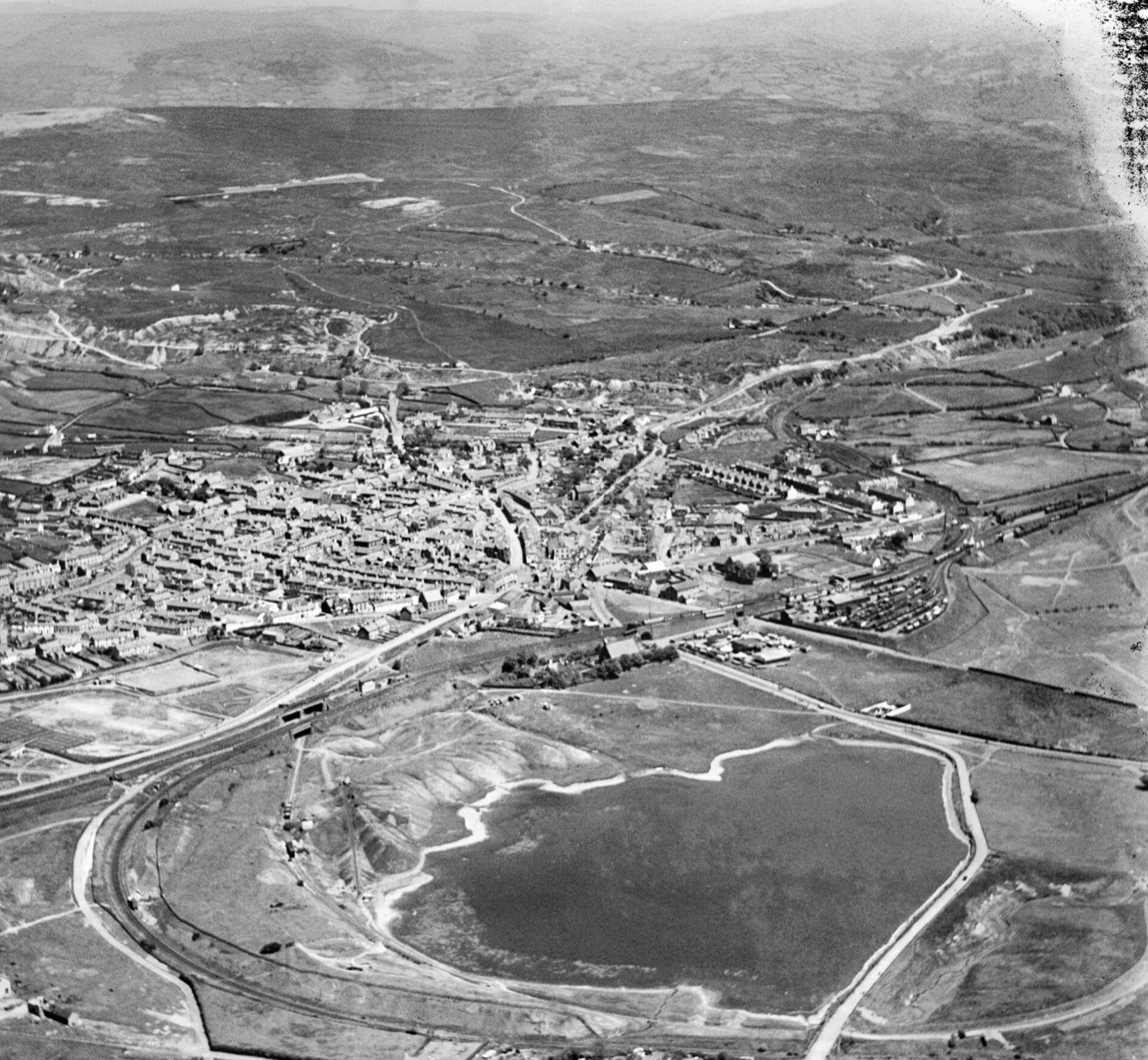
It was however the Doctor Who story ‘The Green Death’ that was to supply a much deeper and more profound resonance upon me. For I was to find myself placed directly into the location of this story which became real and very much a part of my life for roughly two years. Living and growing up in a 1970s South Wales as a child was to live in a dystopian industrialised netherworld of abandoned factories, demolished streets and factories, mountainous slag heaps (a by-product of smelting ores and used metals), desolate places constrained by concrete, vandalised phone boxes broken glass, and discarded soiled plastics which was all interspersed by the occasional green farm land. In 1980-81 my mother’s second marriage was to transport me away from the small village intimacies of Rhiwderin (Bird Hill) near Newport up to the head of the valley and the locale of Beaufort, which currently lies on the northern edge of the county borough of Blaenau Gwent in Wales. Beaufort was a stones throw away from Brynmawr, one of the locations for the filming of ‘The Green Death’ Doctor Who story. The strange, blasted wyrdness of this place was further enhanced by the fact that Brynmawr (in Welsh it is called Gwaun Helygen meaning ‘marsh of the willows’) is sometimes cited as the highest town in Wales, being situated at 1,250 to 1,500 feet (380 to 460 m) above sea level at the head of the South Wales Valleys. It was not unusual to find the odd dead half eaten half putrefied sheep on the A465 Heads of the Valleys Road that runs across the northern edge of industrial South Wales.
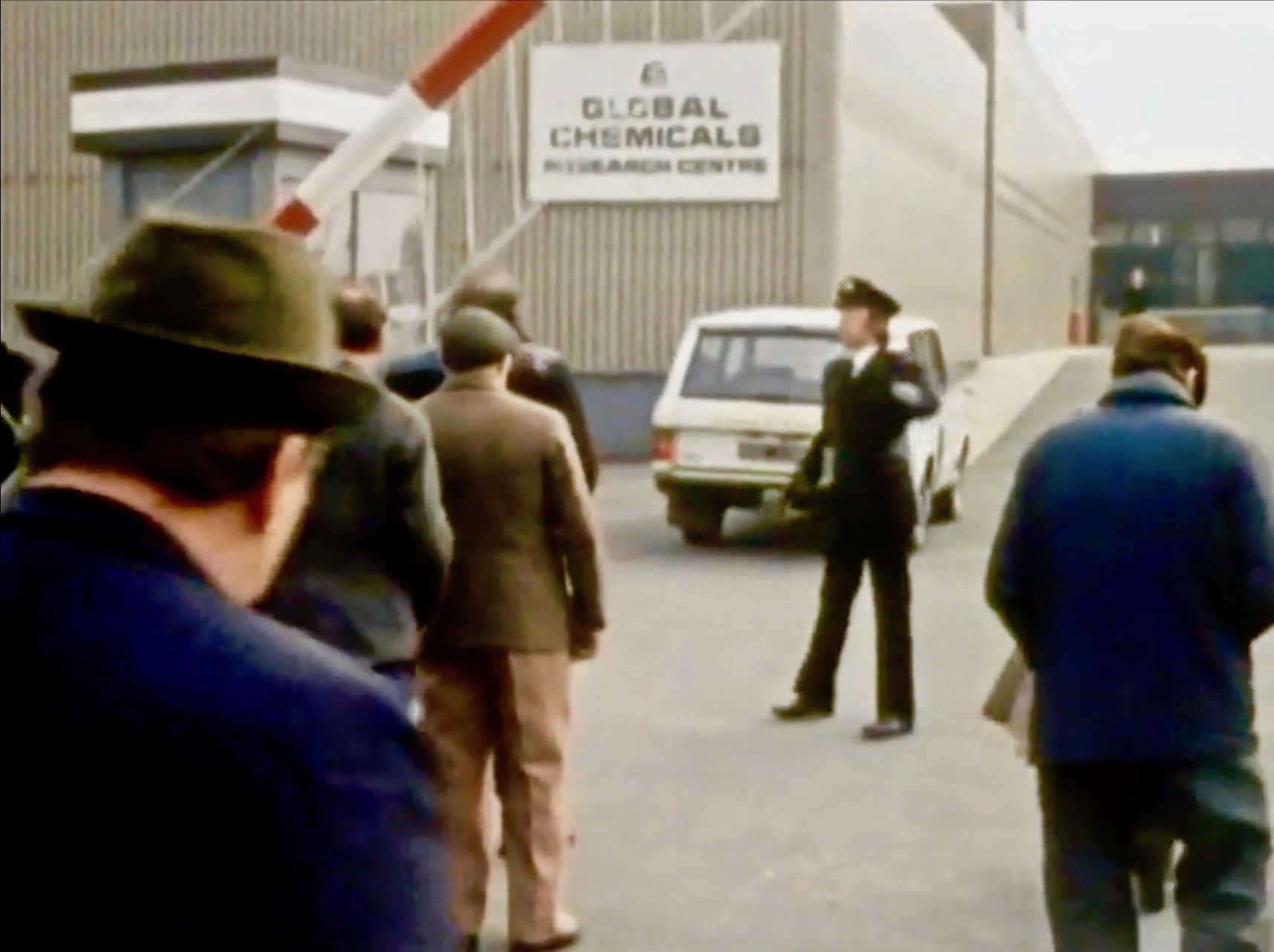
Filming for The Green Death at the abandoned RCA International factory at Intermediate Road, Brynmawr, Gwent, NP3 3YA (later to become Anacomp Magnetics) took place on the 12th, 16th, 19th, and 20th of March 1973 according to the fine and highly recommended Doctor Who On Location by Richard Bignell. The location represented the Global Chemicals oil plant in the story, which is also the home of BOSS, a supercomputer with its own megalomaniacal personality. It runs the company, and controls key staff members, and is responsible for the polluting chemical process. Unlike Proteus IV, an extremely advanced and autonomous artificial intelligence program in Donald Cammell’s Demon Seed as voiced by an uncredited Robert Vaughn, BOSS has a very limited end game of simply just effecting a corporate takeover of the human race, something which Google, Amazon and more recently CrowdStrike have just recently achieved. In a mirrored synchronous orbit to this line of Whovian narrative RCA marketed a Spectra 70 computer line which was a line of electronic data processing (EDP) equipment manufactured by the Radio Corporation of America’s computer division beginning in April 1965.
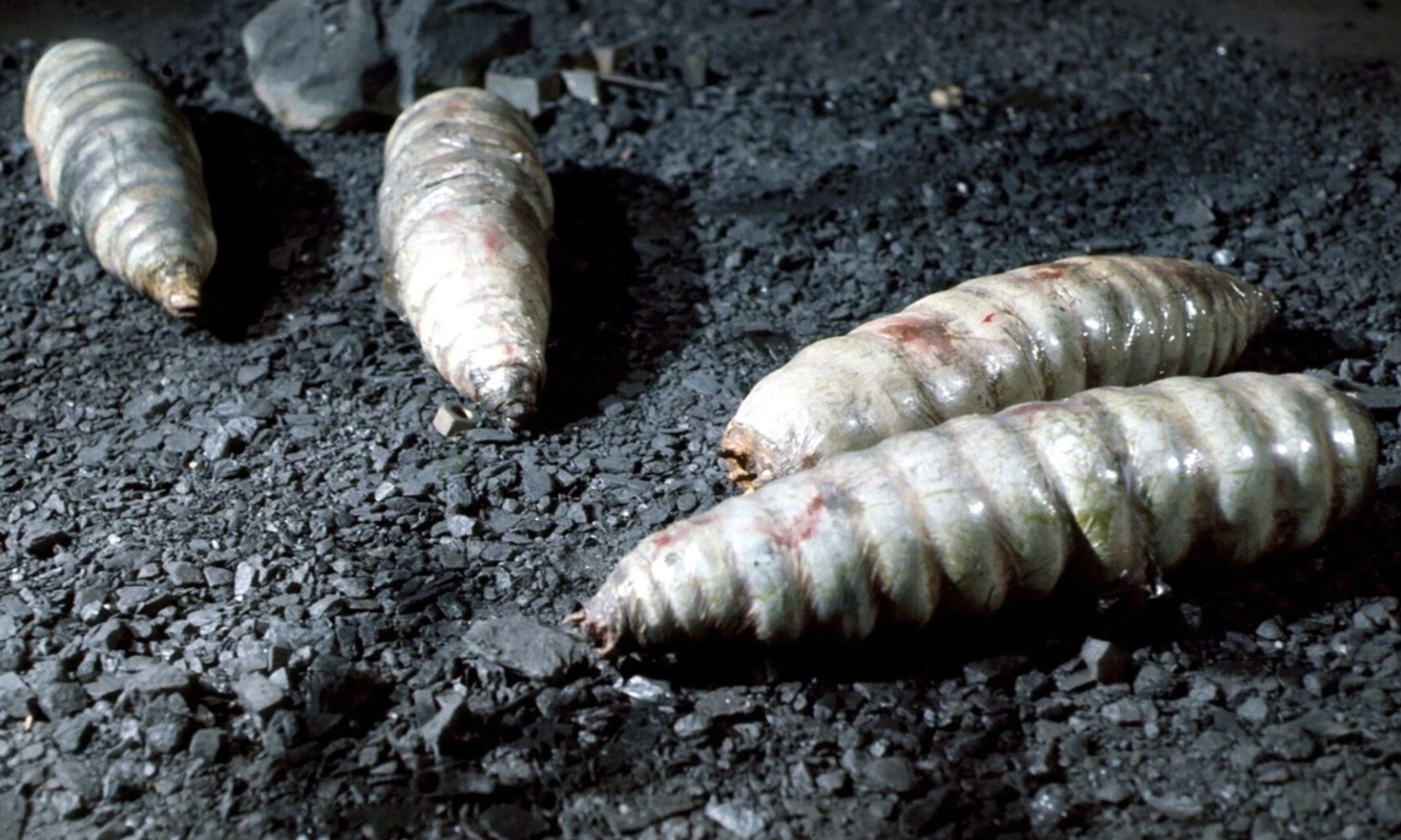
It seems that an amusing urban legend had formed around the filming of The Green Death. An old Wikipedia entry for this particular Doctor Who story stated; “In the footage of the maggots around the quarry site, several of the maggot props were in fact inflated condoms (some inflated with air, others with water).” According to director Michael E. Briant on the DVD documentary The One With the Maggots, they weren’t condoms but were actually party balloons. This Wikipedia entry has now been edited and no longer sports the “condom” theory. ‘The Green Death’ distinguishes itself by featuring a handsome attempt by Jon Pertwee’s Doctor Who at cross-dressing as a 1970s stereotyped cleaning lady. Many folk online complain that Doctor Who indulges in overt transgressive interests. Frankly, I have always viewed and encouraged Doctor Who to be the mother of all transgressions. The idea of time travel in culture had sporadic prohibitive guidance put in place by the Chinese state back in 2011.

‘The Green Death’ has the Third Doctor (Jon Pertwee) and the organisation UNIT investigate a South Wales mine where waste from an oil plant has killed miners and made maggots grow to giant size. Brynmawr had its very own Global Chemicals in the shape of the Dunlop Semtex factory, which facilitated the production of vinyl asbestos tiles along with a unit for making rubber underlay. This work place was apparently “a hell hole where ammonia fumes were rife.” The Market Hall Cinema in Market Square, Brynmawr distinguishes itself as being the first cinema I watched an “X” rated film. The X certificate was replaced in November 1982 in the UK by the 18 certificate. The film was Ridley Scott’s Alien. Both the RCA International factory and the Dunlop Semtex factory have ceased to exist. Only rubble and partial fragments remain. The colliery that was used for filming ‘The Green Death’ was the Ogilvie Colliery near Deri, Caerphilly. A single hidden invisible thread from my family home in Beaufort near Brynmawr and the site of the filming of The Green Death leads far back in time to the 1960s and my mother working at The Tower Theatre Company Canonbury Tower in Islington building a set with the BBC designer who designed the Daleks Raymond Cusick (28 April 1928 – 21 February 2013) on a production of A Taste of Honey by Shelagh Delaney. Cusick knew and worked with my mother and joined the BBC in 1960 as a staff designer. He was responsible for set designs of many Doctor Who stories, creating futuristic settings, historical sets, and dioramas. Another BBC in-house designer, future filmmaker Ridley Scott, had been assigned to design the Daleks in 1963, but due to scheduling conflicts saw the job handed to Cusick. Watching the film Alien in The Market Hall Cinema in Market Square, Brynmawr thus became an act unbeknownst to me of temporal resonance and possible time dilation and displacement. The synchronisation of Alien and Doctor Who at a singular point of place for a moment symbolised fragments of a chaotic plenum of possibility feeding in of itself, a vast sphere of imaginary forces dancing tantalisingly so close and yet so far from each other. If the scheduling conflicts were different could Raymond Cusick have ended up directing Alien? Unlikely but not completely impossible. I finally got to meet and shake hands briefly with The Third Doctor Jon Pertwee at the Sturminster Newton Fair in Dorset in the early 1980s while he was dressed up as Worzel Gummidge. He had a very strong, firm and tree like grip that fully connected with my small teenage hand. The prize of the heavily subscribed raffle was to have tea and cake with Worzel and Aunty Sally (Una Stubbs). To say the least I didn’t win. However, the events had not unfolded as I wished though the local spirits colluded and guided me forward. While walking behind the long event tents I accidentally happened upon and was shown a charming tableaux. There before me was both Jon and Una casually chatting about their agents to each other, completely out of character, their rich, textured, and rugged voices conversely dancing, smoking cigarettes and totally unaware and oblivious of me as I quietly observed them, drinking in their theatrical essences while I smiled long and deep inside.
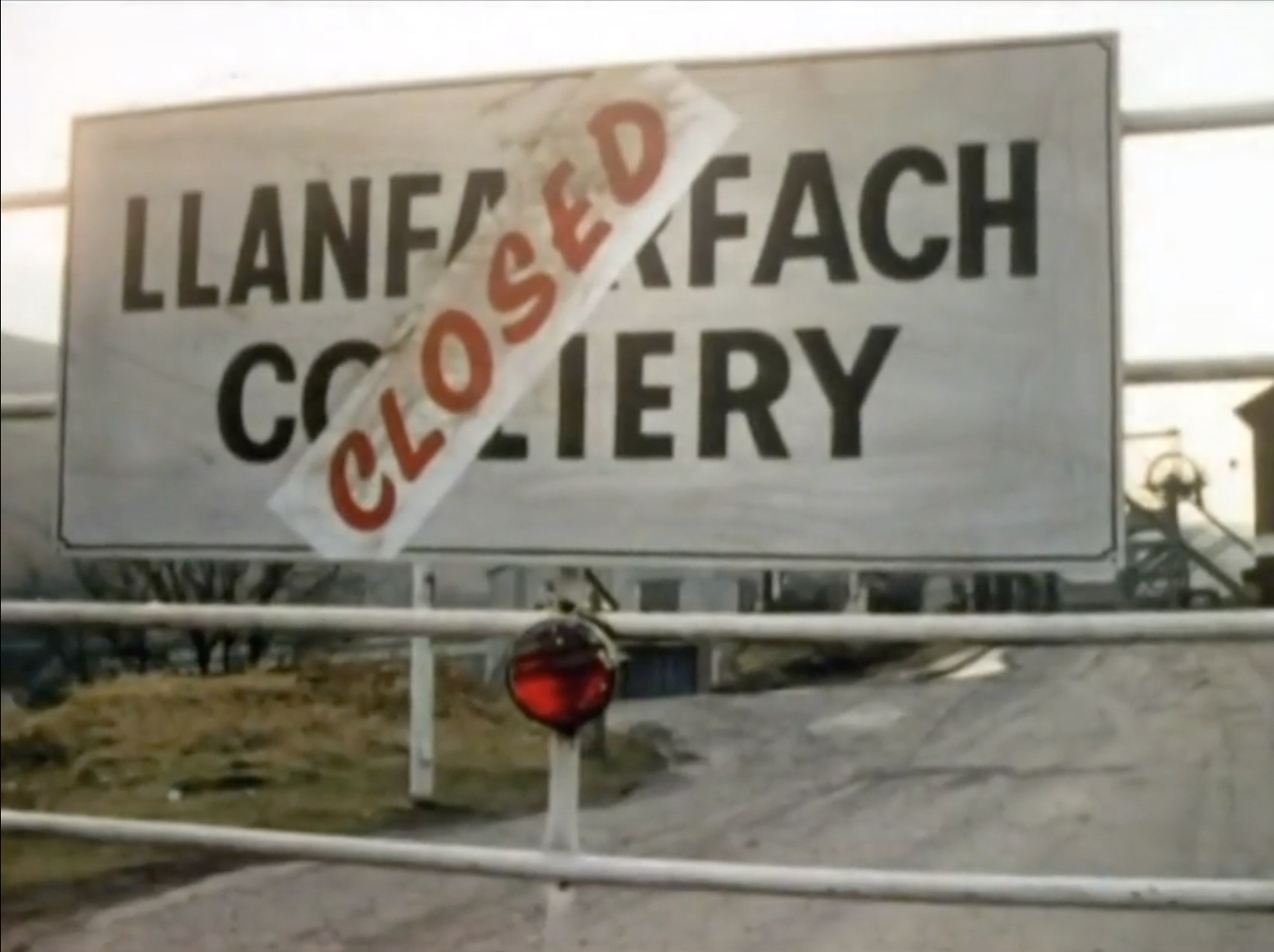
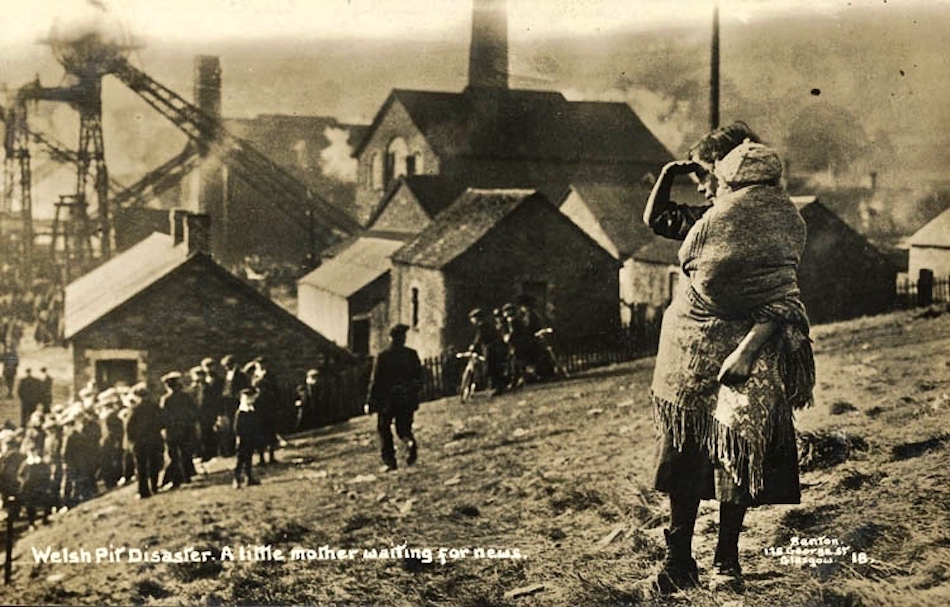
Living in the brutalised, scarred, and damaged landscape of The Green Death for two years was an alienating and haunting experience. Each day the transparency of what seemed and what did not slowly faded in and out. Deep endless cloud banks of fog spooked the walls of the valley. The rising belching clouds from localised industry vomited layers that seemingly came from the very bowels of the earth itself. These chthonic regions are in a state of constant flux. Landslides, fissures, and the punishing weather all jostled to reshape and redefine the contours of this undulating, jagged and rust junk covered landscape. A long liturgy of disasters, accidents, and ecological catastrophes has blighted the history of South Wales. In 1945 my mother lived in a set of rooms that were behind an old derelict shop. She lived there with her mother, two half-brothers and half-sister. Senghenydd, by my mother’s recollection, was a place near Caerphilly of very high weirdness. Incessant poltergeist activity she emphatically stated to me plagued these rooms and her time there. Doors opened without reason or wind, floorboards constantly creaked, atmospheres coalesced and writhed with untoward menace and bizarre occurrences punctuated her time there. She described to me the surreal act of going outside to the park as a child and placing her tiny hand upon the earth. It was hot to the touch. An air of palpable sadness, grief, and misery haunted Senghenydd. On the 14th of October in 1913 at just after 8:00am an explosion in the Universal Colliery in Senghenydd, near Caerphilly ripped through more than two miles of tunnels. An unchecked build-up of high quantities of firedamp, a highly explosive gas consisting of methane and hydrogen and high levels of airborne coal dust were ignited by a spark from underground signalling equipment. The deaths of 439 miners and a rescuer made it the worst mining accident in the United Kingdom. It took weeks and months to remove all of the bodies. Thirty years later the infernal underground fire still burned under my mother’s feet and the tormented souls that tragically lost their lives still raged and hung in the spectral limbo of the Underworld. Newspapers calculated the cost of each miner lost was just 1 shilling (about £13 in 2022).
In the early 1980s I managed to escape the environs of The Green Death after living there for roughly two years. My stepfather once again was the catalyst of our movement as his job changed demanded our family moved down to Somerset. Landscapes leave imprints within the psyche. The 1970s of industrialised wastelands and toxic environments cross-faded into the 80s of lush and untouched fields and burgeoning new forms. A darkened metallic veil of mechanised automation passed seamlessly into vital and enriched beatific pastoral translucence. The Whovian and Quatermass inspired engorged landscape from whence I had journeyed now slowly but surely lost its viral grips within my isness. The environment decides perception. My perception opened up to the natural world. Despite leaving behind a toxic collapsed eco-system (and strangely enough an advanced school curriculum) I lost touch with, due to moving, one of my best friends at the time whom I will now rename Robert for the sake of keeping them respectfully anonymous. We both shared a love for the graphic comic 2000AD, drew many attempts at getting into the readers page (we were both eventually successful), recorded juvenile radio shows on my HiFi and spent a lot of time listening to early Human League and John Foxx. Hanging out in a gang of like-minded geeks was inspirational and transcended the wretched dark surroundings that we all lived in. Moving away was very difficult. Starting again in another place despite it being lush and untouched was depressing since I valued familiar and like-minded human contact over the scenery, even though the earth itself is the source of all sustenance. Many years later I was through social media able to contact Robert one again.
In the fullness of time it slowly became tragically revealed to me that prolonged exposure to The Green Death had left its torrid and unspeakable marks on Robert, who had very sadly become a supporter of Britain First. Heartsick and shocked I witnessed and observed what prolonged exposure and permanent residency in the toxic environs of The Green Death had done to him. Gone was the open minded and playful young friend of my youthful early teens. His complete radicalisation into hardened and discriminatory Nationalism was a repugnant metamorphosis, far to sickening for me to stomach. Like a mutated maggot creature from The Green Death that had somehow escaped from a laboratorial experiment, I realised Robert had now tragically joined the legions of righteous extremists that already had spored and multiplied, releasing a hate filled negative effluent across the very face of the earth. My constant and evolving journey through time and space in a Doctor Who like fashion in tandem with a self-obsessed stepfather’s personal social climbing and ambition had spared me a similar fate of deprivation, stagnation and ultimately brain death, as I now have the dubious luxury of ruminating upon the turgid, viscous, and angry Nationalistic maggots of The Green Death writhing, consuming, and attempting to destroy with urban violence our very precious fragile world both here in Europe and America.
 Sheer Zed ~ Author • Buddhist Shaman • Musician